




News
January 2026
How does Typha germinate?
by Berit Krondorf (comments: 0)
New brochure
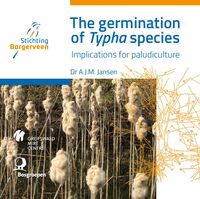
27/01/2026 Andre Jansen set to find how Typa germinates and what it means for the future of paludiculture – a climate-smart way of farming on rewetted peatlands. Because wet agriculture can help to protect peatlands while still producing valuable biomass!
The result: the brochure "The germination of Typha species" now available online! Based on an extensive literature review, it translates ecological knowledge into practical insights for sustainable land use and restoration.
Five key takeaways:
1️⃣ Typha species produce enormous amounts of viable seeds, making sowing a promising and cost-effective alternative to planting.
2️⃣ Water regime is the key driver: fluctuating water levels strongly influence germination and seedling establishment.
3️⃣ Typha seeds germinate fast and reliably under the right conditions, especially with sufficient light and temperature.
4️⃣ The species’ ability to form persistent seed banks allows rapid colonisation after rewetting events.
5️⃣ Understanding germination ecology is essential for successful paludiculture and peatland conservation.
📖 Discover more in the full brochure here.
Peatland-PV could do much better
by Berit Krondorf (comments: 0)
if it was wet
06/01/2026 Good measure, wrong spot: More GHG emitted than saved by sustainable energy – that’s how the greenhouse gas balance on solar power on drained peatlands in Germany looks like so far, this new study in Scientific Reports of @springernature shows:
https://www.nature.com/articles/s41598-025-27952-4
Instead, this could be far better, and solar-PV on peatlands even greener, if … they were wet! Rewetting stops CO2-emissions from drained peatlands nearly immediately and thus prevents harm from continued peat oxidation exceeding the benefit of a clean energy production.
“Newly wet peatlands with suitably designed solar parks could have a combined benefit and can unlock a powerful climate mitigation potential.” says co-author Carl Pump of the University of Greifswald. “But only with smart and careful planning - ideally in cooperation with all relevant stakeholders and authorities.”
165 solar parks have already been built on peatland until December 2023 with a total installed capacity of 643 MWp. In average they provide electricity for 200.000 households per year. Due to generally lower soils scores peatland areas might even have been favoured in the past. A substantial number of these plants receives feed-in tariff. Since 2023 it has been prohibited to receive feed-in tariff for new solar parks built on drained peatlands, making them largely unprofitable.
The study’s key messages:
- No new solar parks on drained peatlands!
- Peatland PV on rewetted soils can substantially contribute to energy transition!
- Through the additional rewetting of the peatland next to the PV, the emission values of a kWh can be even more positive.
-Rewetted peatland PV could also be part of landuse transition to rewet peatland