



News
February 2026
World Wetlands Day
by Berit Krondorf (comments: 0)
Series of Excursions launching
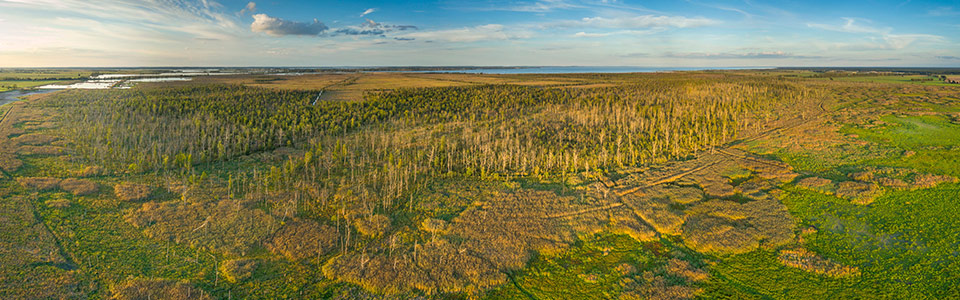
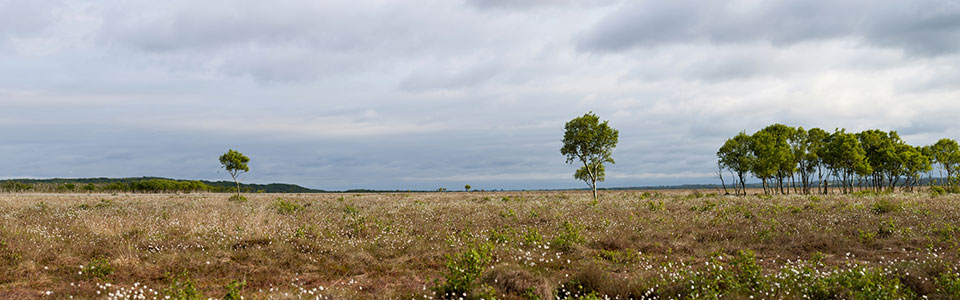
2 February 2026 To mark International Wetlands Day on 2 February, the Greifswald Moor Centre is announcing a new series of events: ‘A Year in Peatlands’. Every month, an excursion will give interested parties the opportunity to explore the diverse peatland landscape in and around Greifswald and in Vorpommern.
In summer, participants can experience individual topics such as biodiversity, history of use and paludiculture in the field. In the winter months, participants can keep warm while working or sit in the cosy peatland library.
Here are the upcoming dates:
On 7 February, it's time to get stuck in at Mannhagen Moor. Together, we will clear young trees from the peatland to protect rare species. Hot soup will be provided during the lunch break.
On 16 March, the excursion will take us to the ‘treasure on the coast’, the Drammendorf polder on Rügen, with lots of information about renaturation and current research in this coastal peatland.
On 25 April, we will see whether peatland protection and use can be combined. The Bargischow Süd polder is being converted to wet cultivation (paludiculture).
On 9 May, we will experience the sound of a coastal flood peatland while observing breeding birds on the Karrendorfer Wiesen. In addition to fascinating bird calls, participants will learn all about the history of use and nature conservation measures in the area.
Whether natural, utilised, degraded or rewetted – the excursions take place in areas with very different conditions and functions. They are open to anyone interested, are free of charge, but require online registration.
All information here: A Year in Peatlands – Greifswald Moor Centre
Background: World Wetlands Day
Since 1997, World Wetlands Day (WWD) has been held annually on 2 February to raise awareness of the importance of wetlands, including moors. On 2 February 1971, the Ramsar Convention, the international agreement on the protection of wetlands, was adopted. Since 2021, it has been recognised as an international day by the United Nations. Pollution, drainage and agriculture, fires and overfishing have threatened or already destroyed wetlands, including moors, worldwide. Yet they are guarantors of biodiversity and climate protection. Among other things, they offer people protection against drought and flooding, purify water and regulate the microclimate. In Germany, 95% of the former moors have been drained and are no longer recognisable as such today.